
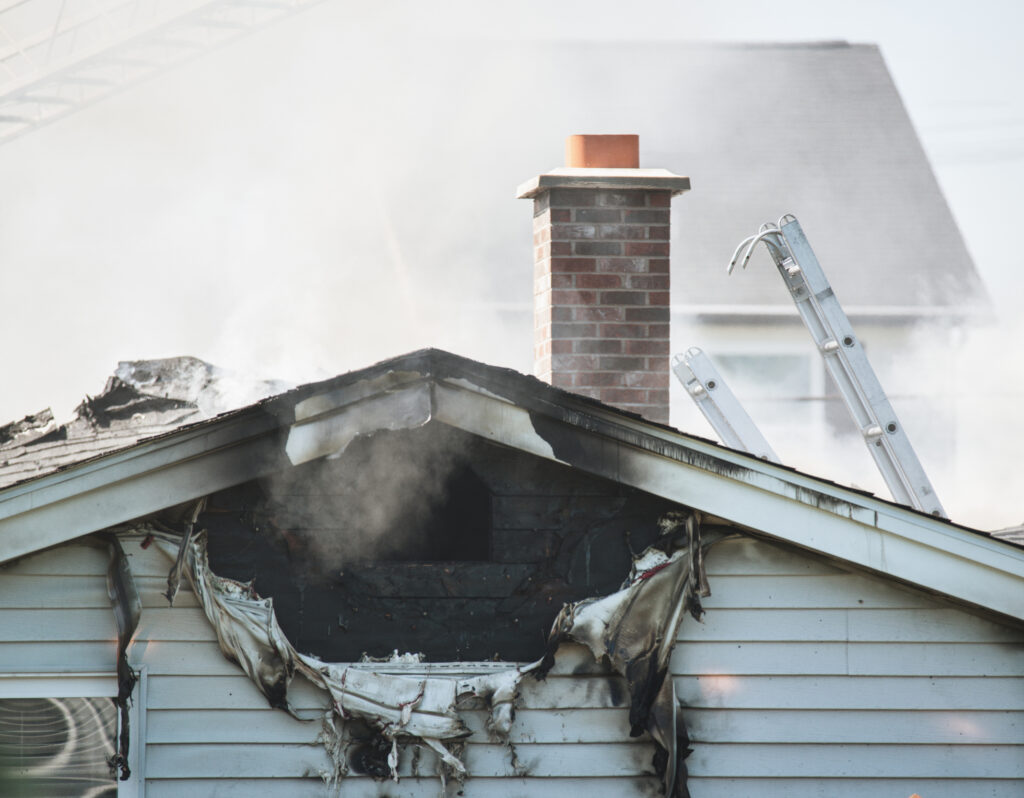
A fire can be extinguished in minutes, but the damage it leaves behind can take days to fully understand and weeks to properly address. Charred materials are only part of the picture. Smoke has traveled into walls and ductwork. Water from firefighting efforts has soaked into flooring and structural cavities. Soot is actively corroding surfaces. And beneath it all, the risk of mold is already building. At Thunder & Lightning Services, we are an IICRC Certified Water & Fire Damage Restoration Firm available 24/7 — because fire damage doesn’t pause, and neither does our response.
Assessment and Stabilization Come First
Before any cleanup begins, the property has to be evaluated for safety. Structural integrity, live hazards, and the full scope of damage must be documented before a restoration team can work effectively. At Thunder & Lightning Services, we start every fire damage job with a thorough assessment, then immediately stabilize the property — boarding up openings, applying tarps where needed, and securing the site against further harm from weather or unauthorized entry.
Skipping this step or rushing past it creates problems later. A restoration plan built on incomplete information leads to missed damage, inadequate repairs, and callbacks. Doing it right from the start protects both the homeowner and the integrity of the entire restoration process.
Debris Removal and Water Extraction Are Closely Linked
Once the site is stabilized, debris removal and water extraction often happen in tandem. Charred materials need to come out, but so does the water that was used to extinguish the fire. That water has saturated flooring, soaked into wall cavities, and pooled in areas that aren’t immediately visible. If it isn’t extracted and dried using professional-grade equipment, mold can take hold within 24 to 48 hours — compounding an already serious situation.
This is one of the most overlooked aspects of fire damage restoration. Homeowners often focus on the visible fire damage and don’t realize that the water damage running parallel to it requires the same level of professional attention. At Thunder & Lightning Services, our IICRC certification covers both — and our team addresses them together rather than treating them as separate problems.
Smoke and Soot Require Specialized Treatment
Smoke doesn’t stay where the fire was. It travels through a structure, depositing residue on walls, ceilings, inside cabinets, and within HVAC systems. Soot is particularly aggressive — it’s corrosive, and the longer it sits on a surface, the more permanent the damage becomes.
Effective smoke and soot remediation requires more than wiping surfaces down. It involves identifying which materials can be cleaned versus which need to be replaced, using the appropriate cleaning agents for different surface types, and treating air ducts and other pathways that carried smoke throughout the property. Professional odor control — using air scrubbers and commercial-grade deodorizers — is the final piece of returning indoor air quality to a safe, livable standard.
Reconstruction Closes the Loop
After the hazards are addressed and the structure is clean, dried, and deodorized, the rebuild begins. This phase can range from patching drywall and repainting to more significant structural work depending on the extent of the fire. At Thunder & Lightning Services, our team handles reconstruction as part of a complete restoration approach — so you’re working with one certified team from emergency response through final finishing, rather than coordinating between multiple contractors.
If your property has suffered fire damage, don’t wait to get a professional assessment. Call Thunder & Lightning Services at (951) 479-7038 — we’re available 24/7 and ready to help you move forward.